



I don’t remember everything from that night.
I remember the music vibrating through the walls of the fraternity house. I remember laughing with friends, holding a drink someone handed me, believing I was safe. I remember feeling suddenly disoriented, like my body no longer belonged to me. My thoughts slowed. My limbs felt heavy. The room blurred.
And then pieces. Fragments. Fear. Powerlessness.
I had been drugged at a fraternity party.
What happened next changed the course of my life, not only because of the assault itself, but because of what followed. The silence. The doubt. The realization that the systems meant to protect me could not, or would not, recognize what had happened.
For a long time, I told no one.
I carried the experience quietly, convincing myself that maybe it wasn’t serious enough, maybe I had misunderstood, maybe it was somehow my fault. That kind of questioning becomes its own prison. Trauma doesn’t just wound you once, it teaches you to doubt your own reality.
Years later, when I finally spoke about the assault, I encountered a second trauma: the law did not see what happened to me as a crime.
Under existing definitions at the time in Texas, my experience would not have been prosecuted. The circumstances surrounding drugging, consent, and coercion did not fit neatly into legal language. What I had endured, the fear, the violation, the loss of control, did not “count” in the way I believed it should.
Imagine finding the courage to speak your truth, only to be told that your truth does not meet the definition of harm.
The message was devastating: some experiences of assault are recognized, and others are quietly dismissed. Some survivors receive justice. Others receive silence.
For years, that silence defined me. I withdrew from my body. I withdrew from my voice. I withdrew from the world. Trauma has a way of making your life smaller; shrinking your confidence, your sense of safety, your belief in your own worth.
But eventually, something inside me began to resist that shrinking.
I didn’t begin with advocacy or legislation. I began with movement.
I began by running.
At first, I could barely run a mile. My body felt foreign to me; something fragile, something broken, something I no longer trusted. But step by step, mile by mile, I started to reclaim it.
Running became more than exercise. It became proof.
Proof that my body was still mine.
Proof that I was stronger than what had happened to me.
Proof that healing was possible.
What started as a personal act of survival grew into something larger. I ran one marathon. Then another. Eventually, I ran 29 marathons across the country, sharing my story publicly for the first time.
With each mile, I discovered something powerful: when one survivor speaks, others begin to speak too.
After races, people would approach me quietly. They would share their own stories in whispers; stories they had never told anyone else. Later, the messages began arriving online, often late at night. Survivors wrote from parked cars, from dorm rooms, from bathroom floors where they locked the door just to feel safe enough to type the truth.
Their experiences were different, but the themes were the same: confusion, self-blame, fear, and an overwhelming sense of isolation.
Many had been told their experiences did not “count.” Many had been failed by institutions. Many believed they were alone.
That realization changed everything for me.
My pain was no longer just personal. It was part of a larger cultural problem. And if the system had failed me, I wanted to help change it.
I began advocating for policy reform, working to strengthen definitions of consent and improve protections for survivors. Advocacy gave me a voice I once believed I had lost. It allowed me to transform anger into action and isolation into community.
But over time, I realized something else: laws change systems, but community changes culture.
Survivors don’t just need justice. They need connection. They need visibility. They need spaces where their strength is recognized, not just their suffering.
That realization led to the creation of the Denim Runs.
Every April, during Sexual Assault Awareness Month, people across the country wear denim in solidarity with survivors. The tradition began decades ago after an Italian court overturned a rape conviction, arguing that a woman’s jeans were too tight to have been removed without her help, implying consent. Women in the Italian Parliament responded by wearing denim in protest, transforming a symbol of blame into a symbol of resistance.
But I wanted to take that symbolism further.
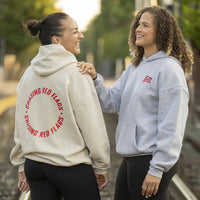
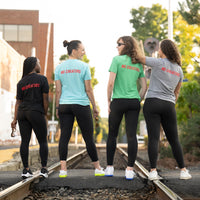
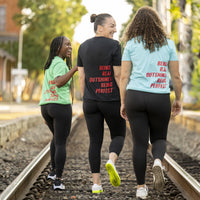
The Denim Runs are a national series of runs and walks for survivors, by survivors, benefiting organizations that support healing. Participants gather not only in protest, but in celebration; celebrating resilience, community, and the courage it takes to keep moving forward.
Because survival is not just about enduring pain. It is about reclaiming joy.
We often talk about survivors only in terms of trauma; what happened to them, what they lost, what they endured. But survivors are also strong. They are resilient. They rebuild their lives. They rediscover themselves.
There is no perfect survivor.
Survival does not always look like suffering. Sometimes it looks like laughter. Sometimes it looks like healing. Sometimes it looks like thousands of people showing up in denim, running side by side, refusing to carry shame alone.
This April, survivors and allies across the country will run and walk together. Some will run for themselves. Some will run for someone they love. Some will run because they are ready to speak, and others because they are still finding their voice.
All are welcome.
When I think back to that night at the fraternity house, I remember how powerless I felt, how small my world became, how alone I believed I was. I could never have imagined that one day I would be running marathons, advocating for change, and helping build a movement rooted in strength rather than silence.
Trauma tried to define my life. Instead, it transformed my purpose.
If my story proves anything, it is this: what happened to you does not determine who you become.
Healing is possible.
Community is powerful.
And together, step by step, we can create a world where survivors are not defined by their pain, but by their resilience.
This April, we run in denim.
Summer Willis
Follow me @likesummerwillis
Join @thedenimruns